




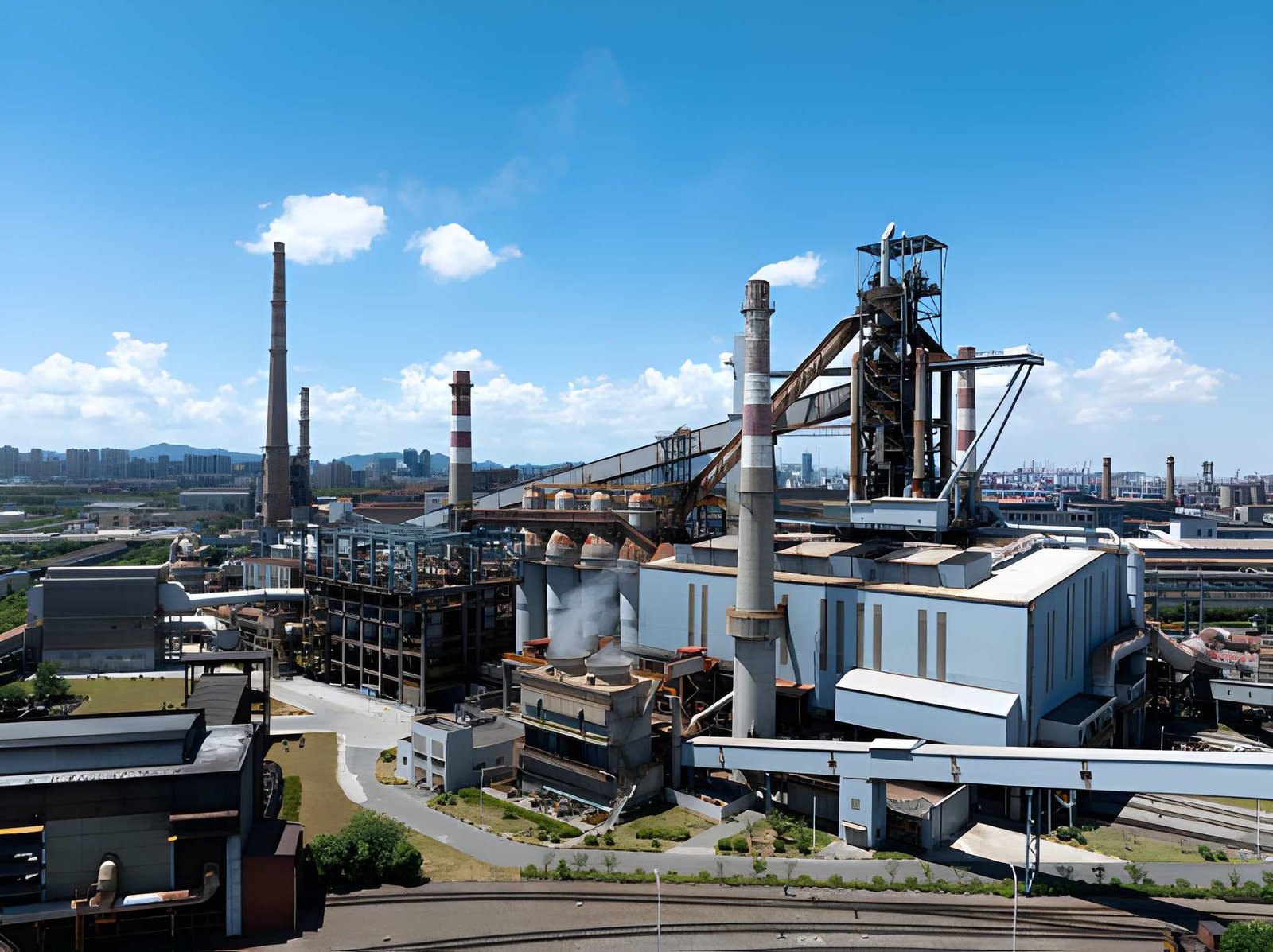
Bangladesh has come a long way from a primarily agrarian economy to one of South Asia’s most dynamic industrial landscapes. At the heart of this transformation sits the Bangladesh steel industry — a sector that has grown quietly but powerfully over the past few decades, fueled by construction booms, infrastructure megaprojects, and a young, fast-growing population hungry for housing and urban development.
If you are an investor, engineer, procurement manager, or simply someone trying to understand how steel in Bangladesh is produced, who makes it, and where the industry is headed — this guide is for you.
A Brief History of Steel in Bangladesh
The story of steel in Bangladesh begins not after independence, but before it. Bangladesh Steel Re-Rolling Mills (BSRM), which went on to become the country’s largest steel producer, was founded all the way back in 1952 in Nasirabad, Chittagong — then a part of East Bengal. The company started with four manual rolling mills, laying down what would eventually become the backbone of a national industry.
After Bangladesh gained independence in 1971, the government recognized early that a self-sufficient steel sector would be essential to rebuilding and growing the nation. New mills were established through the 1970s and 1980s to keep pace with rising construction demand. The 1980s, in particular, saw an acceleration in growth: modern technologies began arriving, investment picked up, and production capacity expanded meaningfully.
Then came the 1990s — a decade of economic liberalization and urban expansion. Private sector involvement surged. Major players like Kabir Steel Re-Rolling Mills (KSRM) launched automated operations in 1984, and Abul Khair Steel (AKS) entered the market in 1993. As construction activity in Bangladesh grew rapidly after 1990, the demand for steel grew at the same pace, driving the establishment of several large-scale steel mills in Bangladesh across Chattogram and Dhaka.
The Scale of the Bangladesh Steel Industry Today
Walk through Chattogram’s industrial corridor today and you will see cranes, furnaces, rolling stands, and the orange glow of molten billets being shaped into TMT rebars. The scale is hard to ignore.
According to industry data, there are around 400 steel mills spread across Bangladesh, with a combined annual production capacity of approximately 9 million metric tons. The country’s annual steel requirement currently sits at around 8.5 million tonnes, and this figure is expected to climb considerably over the next several years.
What is perhaps most striking is how concentrated the top of this market is. Among all the producers in the country, just four major companies — all headquartered in Chattogram — account for 53 percent of total domestic demand:
- BSRM — approximately 25% market share
- Abul Khair Steel (AKS) — approximately 14% market share
- GPH Ispat — approximately 8% market share
- KSRM (Kabir Steel) — approximately 6% market share
The rest of the market is served by smaller mills, which remain competitive by offering products at lower price points and catering to regional demand.
Per capita steel consumption tells another important story. Back in 2012, Bangladeshis consumed roughly 25 kg of steel per person per year. By 2020, that number had already climbed to 45 kg. Projections suggest this could exceed 100 kg per capita by 2030 — a figure that would put Bangladesh in the same league as many middle-income economies. For context, the global average is around 225 kg per capita.
Major Steel Companies in Bangladesh
1. BSRM – Bangladesh Steel Re-Rolling Mills
BSRM is not just the oldest steel company in Bangladesh — it is also the largest. Founded in 1952, the company has grown from four manual rolling mills into a vertically integrated steel giant with an annual production capacity of over 1.9 million metric tons (some estimates place this closer to 2.25 million tonnes when melting and rolling capacities are combined).
BSRM’s products — particularly its BSRM Xtreme 500W+ TMT Rebar — have been used in some of the country’s most iconic infrastructure projects, including the Padma Bridge and Dhaka Metro Rail. The company operates its flagship facilities in Chattogram and has consistently invested in upgrading its electric induction furnace (EIF)-based steelmaking complex.
BSRM is also one of the more forward-looking players in the industry. The company has been vocal about raw material security, exploring long-term scrap supply contracts linked to price indices to reduce exposure to global commodity volatility.
2. Abul Khair Steel (AKS)
Established in 1993, Abul Khair Steel is part of the larger Abul Khair Group. With an annual production capacity of around 1.5 million tonnes, AKS holds the second-largest market share in Bangladesh. The company has consistently expanded its capabilities and is known for producing rebars, billets, and other long steel products used in construction and infrastructure.
AKS operates large-scale facilities in Chattogram and has been among the companies investing in melting capacity expansion to reduce reliance on imported billets.
3. GPH Ispat
GPH Ispat is one of the faster-growing names in Bangladeshi steel. With an annual capacity of around 800,000 tonnes, GPH has built a strong reputation for quality products and has been active in technology upgrades. The company has been investing in continuous casting and rolling technology to improve efficiency and product consistency.
GPH’s growth trajectory reflects the broader ambitions of the Bangladeshi steel sector — not just to meet domestic demand but to eventually position the country as a regional steel supplier.
4. KSRM – Kabir Steel Re-Rolling Mills
KSRM, a concern of the Kabir Group of Industries, began operations in 1984 as one of the early adopters of automated rolling mill technology in Bangladesh. With a production capacity of roughly 800,000 tonnes annually, KSRM has maintained its market position through a combination of quality products and strong brand loyalty in Chattogram and surrounding regions.
5. Emerging Players and New Investments
The top four are not the only story. Several major conglomerates have announced significant expansions or greenfield investments in recent years:
- Meghna Group of Industries is investing an estimated $400 million to establish a major steel plant with an annual capacity of 1.4 million tonnes at the Cumilla Economic Zone.
- In December 2024, IFC (International Finance Corporation), a member of the World Bank Group, partnered with Meghna Re-Rolling & Steel Mills Limited (MRSL) to build Bangladesh’s first climate-smart steel plant. This facility will produce 1.5 million metric tons annually using 100% recycled scrap, backed by a $100 million financing package.
- Bashundhara Group, PHP Group of Industries, and Anwar Group of Industries are also expanding existing capacities and building new factories.
These investments signal that the industry is gearing up for a major capacity jump in the near future.
How a Steel Mill in Bangladesh Works
Understanding how a steel mill in Bangladesh operates gives you a clearer picture of where equipment quality, process technology, and supply chain management intersect.
Most Bangladeshi steel mills follow a re-rolling or electric arc/induction furnace route, as opposed to the blast furnace route used in integrated steel plants. Here is the typical production chain:
Step 1: Raw Material Procurement
The primary raw materials for Bangladeshi steel mills are scrap metal and billets. Over 85% of these inputs are imported, since the domestic shipbreaking industry — despite being one of the world’s largest — cannot yet supply the volumes required by the steel sector.
Scrap is sourced from countries across Europe, North America, and the Middle East, while billets are imported from countries including India, Ukraine, Russia, and Southeast Asia. Managing this import-dependent supply chain is one of the biggest operational challenges for any steel plant in Bangladesh.
Step 2: Melting and Billet Casting
Scrap metal is fed into electric induction furnaces (EIF) or electric arc furnaces (EAF), where it is melted at temperatures exceeding 1,600°C. The molten steel is then refined, and impurities are removed to meet grade specifications.
Once refined, the molten steel is poured into a continuous casting machine, which produces semi-finished billets of specific cross-sections and lengths. Bangladesh has made significant progress in this area — today, the country is capable of supplying around 90% of its domestic billet requirement through local production, though most billet producers serve their own rolling mills as a backward integration.
Step 3: Reheating
Billets are fed into a reheating furnace, where they are brought up to rolling temperature — typically between 1,100°C and 1,250°C. Uniform heating is critical at this stage. Uneven temperature distribution can lead to surface defects, inconsistent mechanical properties, and mill jamming.
Modern reheating furnaces in Bangladesh steel plants are designed for fuel efficiency and precise temperature control.
Step 4: Hot Rolling
This is where the magic happens. The hot billet passes through a series of rolling mill stands, each progressively reducing the cross-section and increasing the length of the material. The rolling sequence is carefully designed based on the end product — whether it is TMT rebar, wire rod, flat bar, angle section, or another profile.
The rolling mill is the centrepiece of any steel plant. Its quality, condition, and precision directly determine the mechanical properties, dimensional accuracy, and surface quality of the final product. Components like rolling mill rolls, housing stands, pinch rolls, flying shears, and gear boxes all need to function in perfect coordination.
For producers expanding or setting up steel mills in Bangladesh, getting the rolling mill configuration right from the start is one of the most consequential decisions they will make.
Step 5: Cooling and Finishing
After rolling, the hot-rolled product passes through a cooling bed, where it is air-cooled under controlled conditions. For TMT rebars, a quenching and self-tempering (QST) process is applied — the bar is rapidly quenched with water immediately after rolling, creating a hardened outer ring of martensite while the inner core remains ductile austenite, which then tempers the outer ring as the bar cools. This gives TMT bars their distinctive combination of high strength and ductility.
The finished bars are then cut to standard lengths (typically 12 metres) by shearing machines, inspected for quality, bundled, tagged, and dispatched.
The Role of Steel in Bangladesh’s Infrastructure Growth
It is impossible to talk about steel in Bangladesh without talking about construction. Roughly 60% of the country’s steel output is consumed by public sector projects — government infrastructure, roads, bridges, flyovers, power plants, and urban transit systems. Another 25% goes into residential construction, and 15% into commercial building.
Some of the landmark projects that have consumed enormous quantities of domestically produced steel include:
- Padma Bridge — Bangladesh’s longest bridge, a symbol of national self-reliance, constructed using locally produced rebar from BSRM and other mills.
- Dhaka Metro Rail (MRT Line-6) — the country’s first rapid transit system, now operational and expanding.
- Rooppur Nuclear Power Plant — requiring massive quantities of structural steel for civil works.
- Matarbari Deep Sea Port — one of the country’s most strategically important port infrastructure projects, currently under development in Cox’s Bazar.
- Bangabandhu Tunnel — the first underwater road tunnel in South Asia, built under the Karnaphuli river in Chattogram.
These projects have been transformative not only in terms of connectivity and economic growth but also in terms of the credibility they have given to Bangladeshi steel manufacturers. When your rebar holds up a 6.15 km bridge, your product has been tested as well as it can be.
Challenges Facing Steel Plants in Bangladesh
For all its growth and ambition, the Bangladesh steel industry operates under real and persistent pressures. Understanding these challenges is important for anyone planning to invest in or supply to a steel plant in Bangladesh.
1. Raw Material Dependency
More than 85% of the key raw materials — scrap and billets — are imported. This makes steel producers acutely sensitive to global commodity price swings, shipping costs, port congestion, and forex availability. The dollar crisis of 2022-2024, which led to restrictions on letter of credit (LC) openings, created severe raw material shortages across many mills.
2. Energy Costs and Supply Reliability
Steel production is energy-intensive. Bangladeshi mills rely heavily on electricity (for induction furnaces) and natural gas (for reheating furnaces). Load shedding has, at various points, reduced production capacity by as much as 20%. Government-mandated increases in power tariffs and gas prices have further squeezed margins.
3. Currency Volatility
The depreciation of the Bangladeshi taka against the US dollar — which hit Tk 120 per dollar in 2024 — sharply increased the local cost of imported raw materials, adding enormous financial burden on producers already grappling with high interest rates and reduced demand.
4. Demand Cycles
Public sector spending drives a significant portion of steel demand. When government mega-projects slow down, face delays, or are curtailed due to fiscal constraints, the downstream impact on steel mills can be immediate and severe. In late 2024, government steel consumption dropped to around 45% of total production from a previous level of 55%, directly impacting mill revenues and utilization rates.
5. Competition Between Scale and Quality
While large mills invest in technology and quality systems, smaller re-rolling units compete aggressively on price. This creates a market where quality differentiation can be difficult to monetize, discouraging some producers from upgrading equipment or processes.
The Future of the Bangladesh Steel Industry
Despite the near-term headwinds, the long-term trajectory of the Bangladesh steel industry is upward. Several structural drivers point in that direction:
Population and urbanization: Bangladesh has over 170 million people. The urbanization rate is rising rapidly, and millions of new homes, schools, hospitals, and commercial buildings will need to be built over the next two decades. Each one will require steel.
Infrastructure investment: The government’s long-term development plans — including roads, ports, power plants, special economic zones, and industrial parks — are capital-intensive and steel-hungry. The Matarbari Deep Sea Port alone, once operational, will transform import logistics for bulk cargo including steel inputs.
Capacity expansion: Bangladesh’s total production capacity is projected to grow to 13 million tonnes by 2027, according to Bigmint estimates. Steel consumption is expected to rise by 25% to 10.6 million tonnes in the same period.
Sustainability shift: The IFC-Meghna partnership is a sign of where things are heading. Bangladesh is beginning to attract green financing for steel projects that use recycled scrap and lower-emission production technologies. This aligns with global pressure on the steel sector to reduce its carbon footprint.
Industrial diversification: As Bangladesh graduates from a low-income economy and its industrial base diversifies beyond garments, demand for flat steel products — used in manufacturing, automotive components, white goods, and shipbuilding — is expected to grow alongside demand for long products.
Industry forecasts suggest Bangladesh’s steel production could double to 16 million tonnes by 2030, growing at roughly 10% annually.
What This Means for Steel Mill Equipment Suppliers
For companies supplying rolling mill equipment, shearing machines, gear boxes, reheating furnaces, and other capital machinery to steel plants in Bangladesh, the opportunity is clear — but so are the requirements.
Bangladeshi steel producers are increasingly sophisticated buyers. The major players have been through multiple generations of equipment upgrades. They know the difference between a well-engineered flying shear and a mediocre one. They understand what poor rolling mill roll quality does to their production yields. They track their downtime, their energy consumption per tonne, and their scrap rates.
What these buyers need from equipment suppliers is not just competitive pricing — though that remains important — but reliability, technical support, fast spare parts availability, and a track record.
As new players enter the market and existing ones expand, there is significant demand for turnkey steel plant solutions — where a single supplier handles design, supply, installation, and commissioning. This reduces project management complexity for the buyer and shifts technical risk to the supplier, which is acceptable only if the supplier has the depth of experience and engineering capability to back it up.
For producers in and around the Chattogram industrial belt, as well as new entrants setting up at economic zones like Cumilla, proximity to a capable supplier with regional service infrastructure adds real operational value.
Conclusion
The Bangladesh steel industry is not a story of overnight success. It is a decades-long accumulation of investment, technical learning, market discipline, and, yes, perseverance through multiple crises. From BSRM’s four manual rolling mills in 1952 to a sector with 400 steel mills and 9 million tonnes of capacity today, the journey has been substantial.
What lies ahead is even larger. A population of 170 million moving steadily toward middle-income status, an infrastructure agenda that will require tens of millions of tonnes of steel over the next decade, and a new generation of green investments backed by global capital — these are not small tailwinds.
For every engineer planning a new steel mill in Bangladesh, every procurement manager sourcing equipment for an upgrade, and every investor evaluating the sector’s potential — the fundamentals are there. The challenges are real but manageable. And the window of opportunity, for those who understand the market and come prepared, is very much open.