




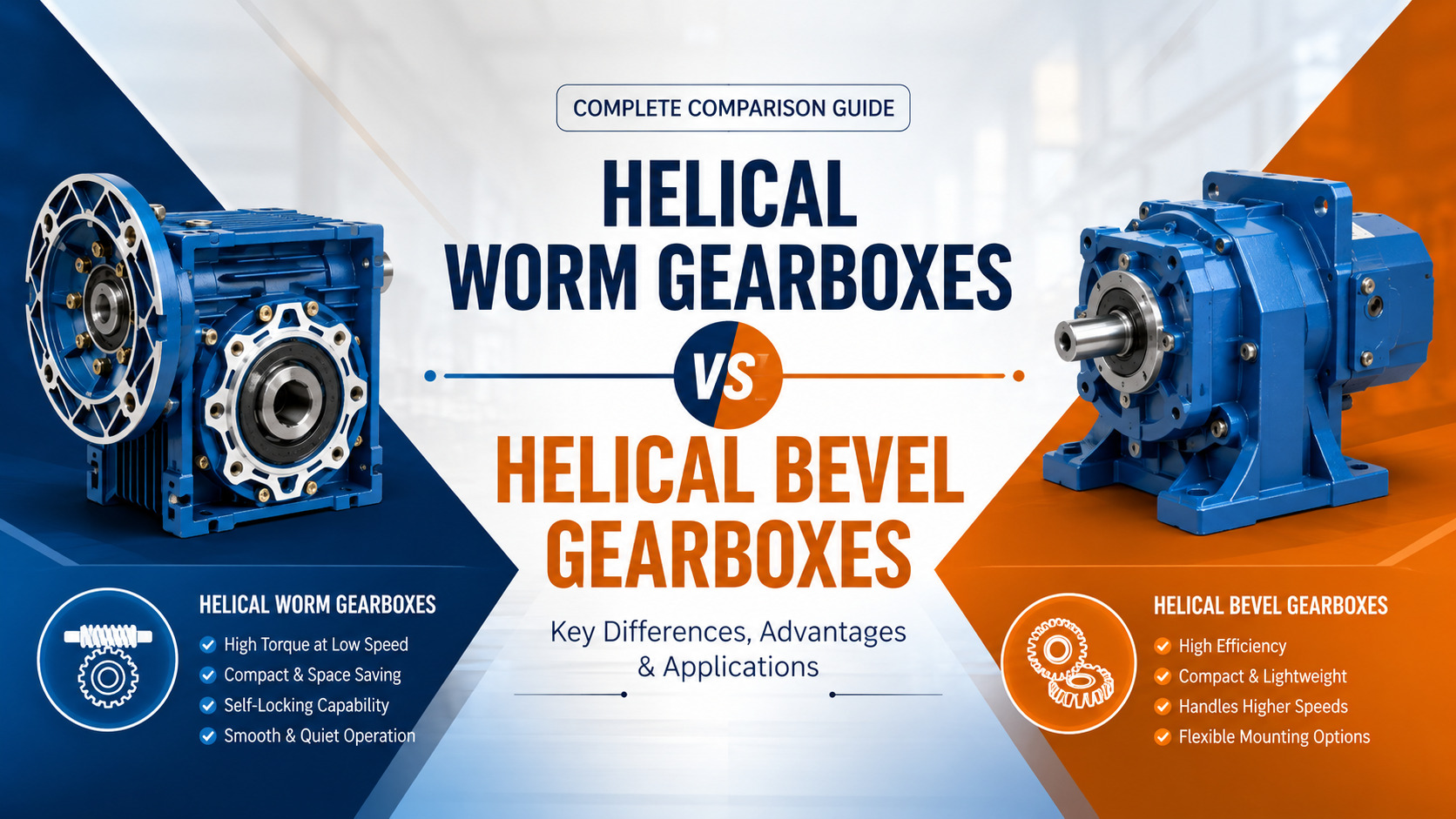
Anyone who’s spent time around steel mills or heavy production lines knows there’s no shortage of gearbox types to keep straight. Bevel helical, worm, helical reduction, planetary… it goes on. And more often than not, plant engineers end up sticking with whatever they’ve always used rather than actually stopping to ask which one fits the job best.
So let’s actually walk through it. Here’s how bevel helical and worm gearboxes really differ and when each one makes sense.
What Is a Bevel Helical Gearbox?
Think of it as two gear types working together in one housing. Helical gears handle the first stage of speed reduction with their smooth, angled teeth, while bevel gears take care of changing the direction of power, usually at a right angle. Put them together and you get a compact unit that can handle serious torque while also redirecting motion where you need it.
Where Bevel Helical Gearboxes Shine
Helical gears mesh gradually instead of all at once, so they tend to run smoother with less friction loss. That translates into a few real advantages:
- They’re efficient. Less energy wasted means lower operating costs over time.
- They don’t take up much room, which matters a lot on a crowded factory floor.
- They handle heavy, continuous loads well, which is why you’ll see them on conveyors, mixers, and material handling lines.
What Is a Worm Gearbox?
A worm gearbox works differently. Picture a screw-shaped gear (the worm) meshing with a toothed wheel to move power between shafts sitting at 90 degrees to each other. It’s an old design, honestly one of the oldest still in serious industrial use, but it’s stuck around for good reason.
Where Worm Gearboxes Shine
The standout feature here is self-locking. The worm can turn the wheel, but the wheel can’t turn the worm back on its own. That means a worm gearbox can hold a load in place without needing a separate brake, which is genuinely useful in lifting equipment or inclined conveyors. On top of that, worm gearboxes pack a large speed reduction into a single stage, and they tend to run quietly thanks to the sliding contact between the worm and wheel.
Key Differences Between the Two
Efficiency
Bevel helical gearboxes usually run in the 90 to 98 percent efficiency range. Worm gearboxes, because of the sliding friction between the worm and wheel, can drop as low as 50 to 90 percent depending on the setup. That gap adds up over time, especially in equipment that runs continuously.
Holding a Load in Place
This one goes to worm gearboxes. Because of that self-locking behavior, they’ll keep a load steady even if power gets cut, which matters for lifting applications. Bevel helical units don’t have this built in, so you’d need an external brake if that’s a requirement.
Heat and Noise
Worm gearboxes tend to run hotter because of the sliding friction, which sometimes means you need extra cooling if the equipment runs continuously. Bevel helical gearboxes generally stay cooler and hold up better under prolonged, heavy-duty use.
Maintenance
Since bevel helical gearboxes rely on rolling contact rather than sliding, wear tends to happen more slowly, so they need less frequent servicing. Worm gearboxes, especially the worm wheel, wear a bit faster and usually need closer attention over time.
Helical Worm Gearboxes: A Bit of Both
There’s a middle option worth knowing about too. Helical worm gearboxes pair a helical gear stage with a worm gear stage in the same housing. You get the smoother, more efficient reduction that helical gears are known for, plus the compact, high-ratio benefits of a worm stage. For applications that need a big speed reduction but don’t have space for a bulky multi-stage setup, this combination tends to work really well.
How to Actually Choose Between Them
Instead of defaulting to habit, it’s worth asking a few honest questions about the application:
Does the load need to stay in place without power? If so, worm gearboxes have a clear edge with their self-locking design. If not, the higher efficiency of a bevel helical unit could save more over the long run.
What’s the duty cycle look like? Bevel helical gearboxes tend to handle sustained, heavy operation with less heat buildup, while worm gearboxes often do better with intermittent use.
How much space do you actually have? Worm gearboxes generally pack a bigger reduction ratio into a smaller footprint. Bevel helical units, while efficient, sometimes need more room depending on the ratio required.
And what does your maintenance schedule look like? If routine servicing is limited, bevel helical gearboxes typically demand less upkeep across their working life.
Where a Helical Reduction Gearbox Comes In
Speed reduction is probably the single biggest reason industries reach for a gearbox in the first place, whether that’s slowing a fast-spinning motor down to drive a conveyor, a mixer, or part of a rolling mill. A Helical Reduction Gearbox is purpose-built for exactly that job. It uses helical gear stages to bring speed down while multiplying torque, all while keeping the smooth, low-noise operation helical gears are known for. In heavy industrial settings, steel rolling mills especially, where reliability and long service life matter more than almost anything, this type of gearbox tends to hold up remarkably well under constant, demanding loads.
Final Thoughts
There’s no single “winner” between bevel helical and worm gearboxes. It really comes down to matching the design to what the job actually needs. If load holding, a small footprint, and simplicity matter most, worm gearboxes are hard to beat. If efficiency, cooler running temperatures, and lower long-term maintenance are the priority, bevel helical units usually win out. And for applications that need serious speed reduction with dependable torque, helical and helical worm designs offer a solid path right down the middle.
Frequently Asked Questions
Which lasts longer, a bevel helical gearbox or a worm gearbox?
Bevel helical gearboxes typically hold up longer under continuous heavy loads since they see less friction-related wear. Worm gearboxes can still last a long time, but they usually need more regular attention because of the sliding contact involved.
Can a worm gearbox handle the same loads as a bevel helical gearbox?
It can handle substantial loads, yes, but it’s really better suited to jobs where self-locking matters more than squeezing out maximum efficiency under continuous heavy use.
Why do worm gearboxes run hotter?
The sliding contact between the worm and the wheel creates more friction than the rolling contact you get in helical gear designs, and that friction shows up as extra heat during operation.
Is a helical worm gearbox better than a plain worm gearbox?
Depends on what you need. A helical worm gearbox generally offers better efficiency than a standard worm design while still keeping that high reduction ratio in a fairly compact package.
What industries typically use helical reduction gearboxes?
You’ll find them in steel and rolling mills, material handling systems, conveyors, mixers, and other heavy industrial equipment where consistent torque and dependable speed reduction really matter.
How do I figure out which gearbox is right for my setup?
It mostly comes down to whether you need load holding, what your duty cycle looks like, how much space you’ve got, and how much maintenance you can realistically keep up with. Talking it through with a gearbox manufacturer who knows your application usually clears things up fast.
Getting this right usually comes down to understanding what your equipment actually needs day to day, rather than sticking with whatever’s always been used. For industries that need dependable, heavy-duty gear solutions built for continuous operation, RMT Tools manufactures a range of gearboxes, including helical, worm, and reduction gear units, engineered for reliability in demanding industrial environments across India and beyond.